Keyword Research Tools for Small Business

By Greenhouse Marketing Editorial Team · Updated 2026-07-24
Greenhouse Marketing's team recommends starting with Google Keyword Planner to find search volume, then prioritizing long-tail, low-competition phrases specific to your Fuquay Varina service area. Analyze competitor pages, group keywords by customer intent, and target 10-15 terms per page for measurable local SEO results.
Keyword research starts with brainstorming terms customers actually search, then validating them with tools—since 90% of pages get zero organic traffic from Google, precise targeting matters. Small teams, like Greenhouse Marketing's Fuquay Varina operation, can prioritize low-competition, high-intent local phrases before scaling content efforts.
Small business keyword research starts by listing terms customers actually search, then validating them with tools like Google Keyword Planner for volume and competition data. Owners should prioritize local, low-competition phrases over broad national terms. Greenhouse Marketing builds custom keyword strategies for Triangle-area businesses using 20 years of integrated SEO expertise across nine service areas.
Key Takeaways
Keywords are the exact words and phrases your target customers type into search engines daily.
Ninety percent of web pages receive zero organic traffic from Google without proper keyword research.
AI search results now answer queries directly in SERPs, reducing clicks to websites significantly.
Keyword research identifies valuable search queries that connect relevant customers to your small business content.
What Do You Need Before You Start?
A small business needs three things before starting keyword research: a clear list of business goals, access to reliable keyword research tools, and a willingness to look at what customers actually type into search engines. Skipping this groundwork wastes hours later, because content built on guesswork rarely matches real search behavior. Keyword research reveals the exact words and phrases potential customers use. That data shapes smarter decisions about website structure and content topics.
What should a business owner know before choosing keywords?
Business goals come first. A bakery chasing wedding cake orders needs different keywords than one focused on daily walk-in traffic. Goals determine which search terms matter most. Local market context matters too. A Triangle-area business competing in Raleigh, Durham, or Cary faces different search patterns than a national brand.
What tools or resources are needed to get started?
Before diving into research, gather these basics:
A short list of core products or services offered
Access to at least one keyword research platform (free or paid)
Notes on what makes the business different from local competitors
A rough sense of customer language — the phrases customers use when asking about the business
Custom strategy matters more than templates. Greenhouse Marketing builds each campaign around a business's specific goals and local market rather than applying a one-size-fits-all plan. Founder Nic Green brings 20 years of combined creative. Data-driven marketing experience to that process, based out of Fuquay-Varina and serving Triangle-area businesses directly.
How Do You Brainstorm Your Starting Keyword List?
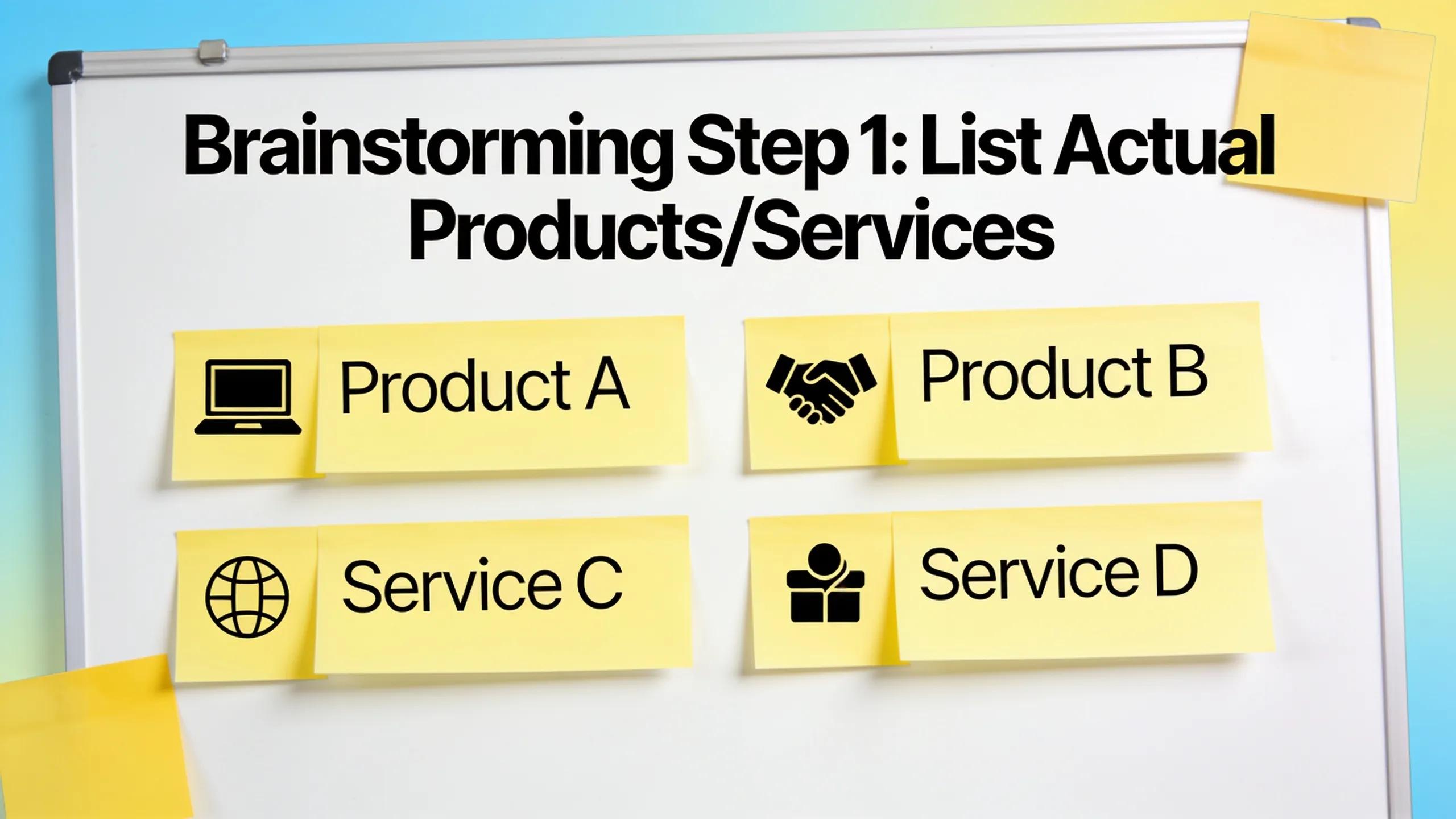
A starting keyword list begins with a simple inventory: every product or service the business sells, written out in plain language a customer would use. From there, the owner steps into the customer's shoes and imagines the exact words typed into Google when searching for that offering. This is keyword research in its most basic form. The process of finding valuable search queries that target customers use to look for products, services, or information.
Skipping this step carries real cost. A page built around a topic nobody searches for earns zero organic traffic, regardless of how much time went into writing it. That's lost effort with no return.
Where should the list start?
The list starts with the business itself, not with software or spreadsheets. Owners should write down every product, service, and specialty offered, then list the problems those offerings solve. This becomes the raw material that keyword research tools later expand and refine.
How does this connect to a broader keyword strategy?
This early brainstorm sets the foundation for a full SEO keyword strategy, since every later step. Filtering by search volume, checking competition, grouping by intent — depends on having a solid starting list. A thin or generic list produces a thin strategy.
Owners can strengthen the list by including:
Core product and service names
Everyday phrases customers use, not internal jargon
Location-specific terms tied to the service area
Longer, more specific phrases — long-tail keywords — that reflect exactly what a ready-to-buy customer might type
Greenhouse Marketing's process begins with a discovery call. The founder personally reviews the business website and competitive landscape before any strategy work starts.

Which Tools Reveal Real Search Volume?
Reliable search volume numbers come from dedicated keyword research tools rather than guesswork or gut instinct. Small business owners who skip this step often join the majority of website operators whose pages earn zero organic traffic from Google, largely because search demand and competition were never checked before content went live. Since more than 90% of online experiences begin with a search engine, verifying volume before writing a single page becomes the foundation for visibility, not an optional extra.
What should a small business owner look for in a keyword tool?
A useful tool shows three things clearly: monthly search volume, ranking difficulty, and related terms worth targeting. Free and paid options both work, but the process matters more than the platform. The goal is a repeatable system that moves from initial idea to a finished, optimized page.
That system generally follows this sequence:
Brainstorm a broad list of topics tied to products, services, and customer questions.
Enter those topics into a keyword tool to check monthly search volume.
Filter for long-tail keywords — longer, more specific phrases that carry less competition and higher buying intent.
Review the ranking difficulty score for each term before committing time to it.
Group related keywords by topic to guide page structure and internal linking.
Assign one primary keyword per page and optimize titles, headers, and body copy around it.
Does keyword research replace the need for other marketing services?
No — volume data only points to opportunity; someone still has to act on it. A sound SEO keyword strategy works best when findings flow directly into web design, content creation, and paid campaigns instead of sitting in a spreadsheet. Agencies offering nine integrated services under one roof, from research through execution, close that gap without handing the project between separate vendors.
How Do You Narrow In On Long-Tail Phrases?
Narrowing in on long-tail phrases starts with a simple shift: stop guessing what buyers might type, and study what their searches actually reveal about their problems. Small business owners who skip this step waste hours writing content nobody searches for. The process below breaks it into a repeatable sequence.
List the core problem, not the product. Buyer searches expose the issue someone faces and how much they already know about possible fixes. A search for "leaky faucet won't stop dripping" signals a different mindset than "plumber near me."
Pull suggestions from keyword research tools. Free and paid platforms surface related phrases, monthly search volume, and competition levels, giving owners a data-backed shortlist instead of a guess.
Filter for specificity. Broad terms like "marketing agency" attract heavy competition. Longer, three-to-five-word phrases attract fewer competitors and far more qualified searchers.
Layer in location. Businesses serving Raleigh, Durham, Cary, Chapel Hill, Apex, Fuquay-Varina, and Wake County benefit from testing neighborhood-level phrasing, since local buyers often search by town rather than region.
Rank phrases by buyer intent. Group them into research-stage and ready-to-buy categories, then prioritize content for the second group first.
What Makes a Long-Tail Keyword Worth Targeting?
A worthwhile phrase matches a specific, answerable problem rather than a vague topic. It should reflect language a real customer would type while already leaning toward a decision. Nic Green, who directed agent marketing at Coldwell Banker Howard Perry and Walston before founding Greenhouse Marketing, built this kind of targeting into agent strategy long before AI Overviews changed how search results get answered.
Do Long-Tail Phrases Still Matter With AI Overviews?
Yes. Pages can rank at the top of Google and still receive zero clicks because AI Overviews answer many queries directly on the results page. A tightly targeted seo keyword strategy built around specific, high-intent long-tail keywords keeps content relevant when broad terms get absorbed into AI summaries.
What Mistakes Should You Avoid After Research?
The biggest mistake happens when a business owner treats keyword research as a finished project instead of a living part of an ongoing seo keyword strategy. Search behavior shifts constantly. AI-powered search tools are already changing how people find answers without ever clicking a website link. A list of keywords built six months ago and left untouched stops reflecting how customers actually search today.
Small business owners managing SEO alone tend to fall into a few predictable traps. Avoiding these keeps research from going to waste:
Filing keyword lists away and never revisiting them as trends shift.
Chasing high-volume terms while ignoring long-tail keywords that convert at higher rates.
Spreading focus across too many channels without a unified plan.
Letting strategy decisions get passed between different people with no single owner.
How often should keyword strategy get revisited?
Search trends move quickly enough that a quarterly review makes sense for most small businesses. Greenhouse Marketing builds a tailored, multi-channel roadmap from each client's audit and stated goals, rather than a single-channel plan set once and forgotten.
Why does a single point of contact matter for keyword strategy?
Handoffs between team members create gaps where research gets lost or misapplied. Greenhouse Marketing keeps every account with one dedicated senior expert, with zero junior handoffs, so strategy stays consistent from research through execution. That consistency has supported work across more than 200 businesses, reflecting a repeatable process rather than guesswork.
FAQ
What is the first step in keyword research for a small business?
List every product or service the business offers in plain language, then imagine the exact words customers type into Google when searching for that offering.
What should a business gather before starting keyword research?
Gather a list of core products or services, access to a keyword research platform, notes on competitive differentiators, and a sense of customer language and phrasing.
Why does local context matter for small business keyword research?
Triangle-area businesses competing in Raleigh, Durham, or Cary face different search patterns than national brands, so goals and location shape which keywords matter most.